Do less work.
Remove redundant work, allocations, copying, indirection, and abstractions. Then optimize what remains.
Independent systems software
We rebuild software in Rust and assembly to make better use of the machines we own.
Performance by design. Control down to the hardware. Agentic AI to take on the rewrites worth doing.
Explore the projectsPhilosophy
You should control the hardware you own and the software that runs it. Faster machines are no excuse for unnecessary overhead.
Remove redundant work, allocations, copying, indirection, and abstractions. Then optimize what remains.
Preserve useful behavior and compatibility. Question the implementation behind them.
Test responsiveness, execution predictability, and memory use. Run well on modest hardware. Put powerful machines to work.
Agentic AI makes ambitious rewrites practical. With explicit requirements, agents help investigate, implement, test, benchmark, and iterate against reference behavior. Lower development costs let us focus on runtime efficiency, correctness, and control.
Rust Assembly
Rust brings native performance and strong safety guarantees. Assembly gives direct control where we can improve on compiler output.
Our architectural ambition: exchange equivalent Rust and assembly implementations through defined interfaces and shared compatibility tests. This is a direction we are building toward.
Projects
From timing-sensitive games to kernels and everyday tools, the same work feeds a growing set of reusable components.
A Rust rewrite of StepMania/ITGmania, built around precise timing and performance, with Vulkan and OpenGL rendering.
Playable builds for Windows, Linux, BSD, and macOS. Under heavy development: bugs, breaking changes, and unfinished features are expected.
Explore DeadSync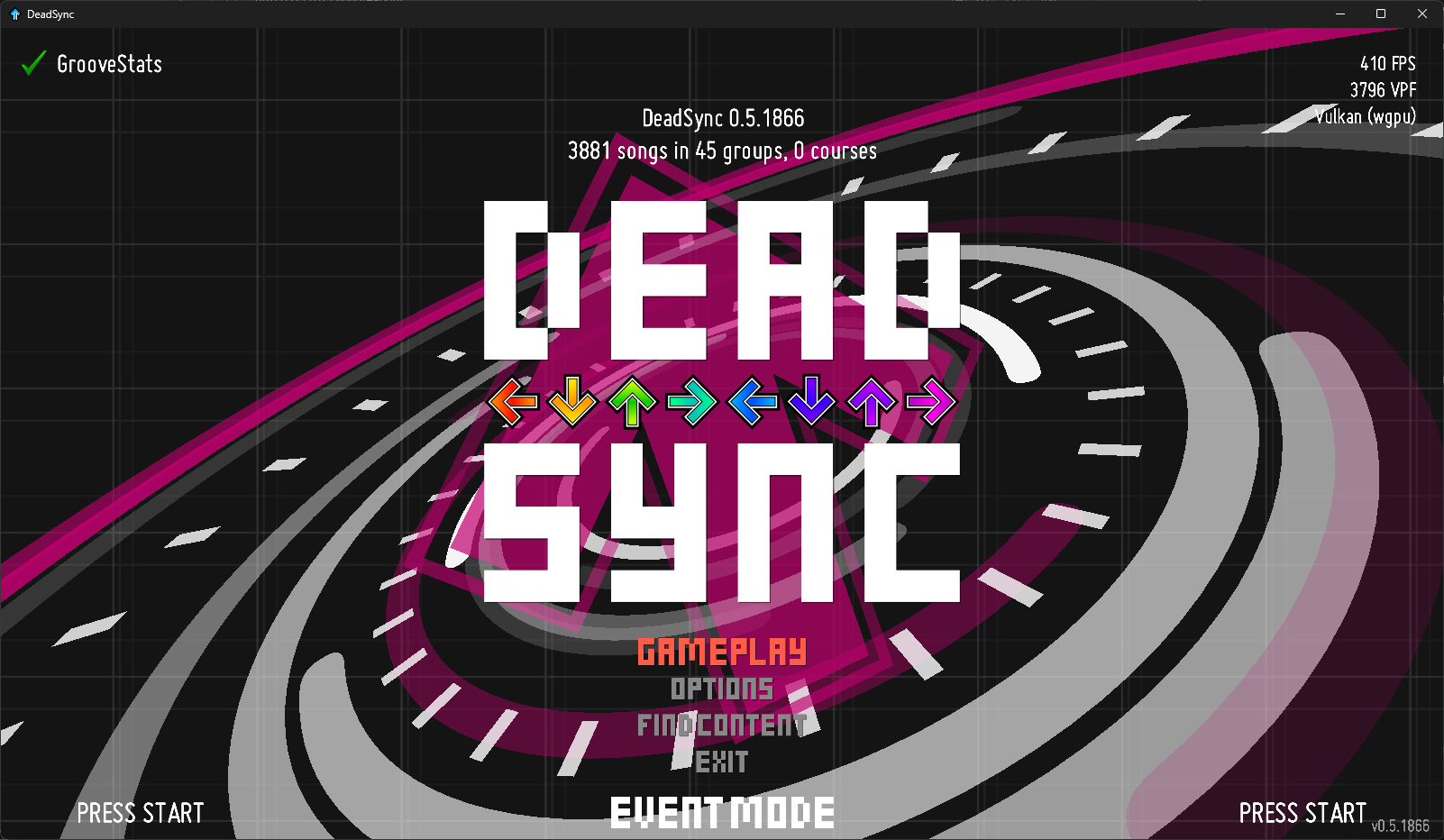
Current project: linux-rs
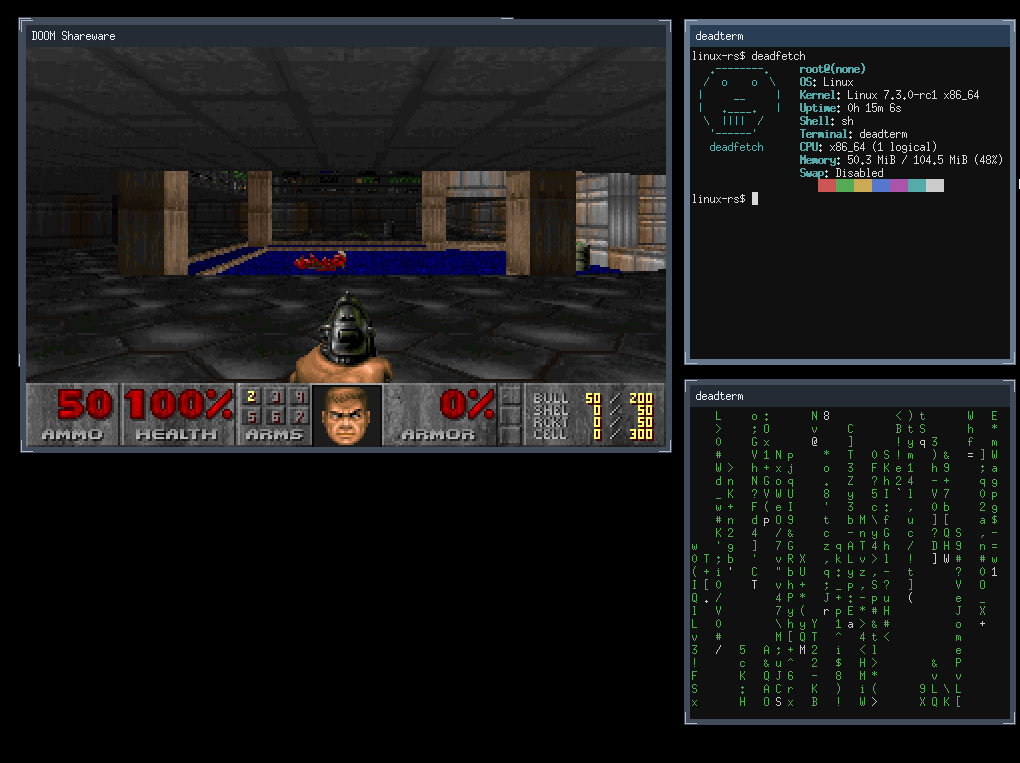
In development · Private sourceAn ongoing Linux-compatible kernel implementation in Rust. Rebuild the internals while testing the behavior that existing software depends on.
Documented test images boot deadinit and deadsh, with a scoped desktop in QEMU. Compatibility and hardware support remain limited; a general-purpose Linux replacement is the goal.
A Rust kernel targeting the FreeBSD/amd64 userspace ABI. A second kernel foundation for the same family of system software.
The current QEMU system boots deadinit, deadsh, and selected deadcoreutils, with a framebuffer terminal and PS/2 keyboard input. Broader FreeBSD compatibility remains in development.
The pieces between the kernel and the application. Small, focused implementations, each with its own compatibility boundary.
Editing, diagnostics, measurement, and a little phosphor-green distraction. Focused tools built in Rust.
Reusable components already doing work inside DeadSync: graphics backends, audio, native input, and platform support.
The deadlib-* crates currently live in the DeadSync workspace. Extracting them into independently reusable libraries is the next step.
Status reflects documented scope. A working component is not a claim of complete compatibility.
About & contact
DeadCorp is an independent systems software company. We reverse engineer, reimplement, and improve the software our machines run.
“Dead” began with the StepMania/ITGmania rewrite DeadSync: dead on sync. It now expresses a larger ambition: definitive implementations. Software people can understand, control, and depend on.
Explore the source, help test the work, or support independent development. Performance and compatibility problems are welcome starting points.
Technical discussion starts in the public project’s issues. Interested in sponsoring the work? We welcome that interest, too.